
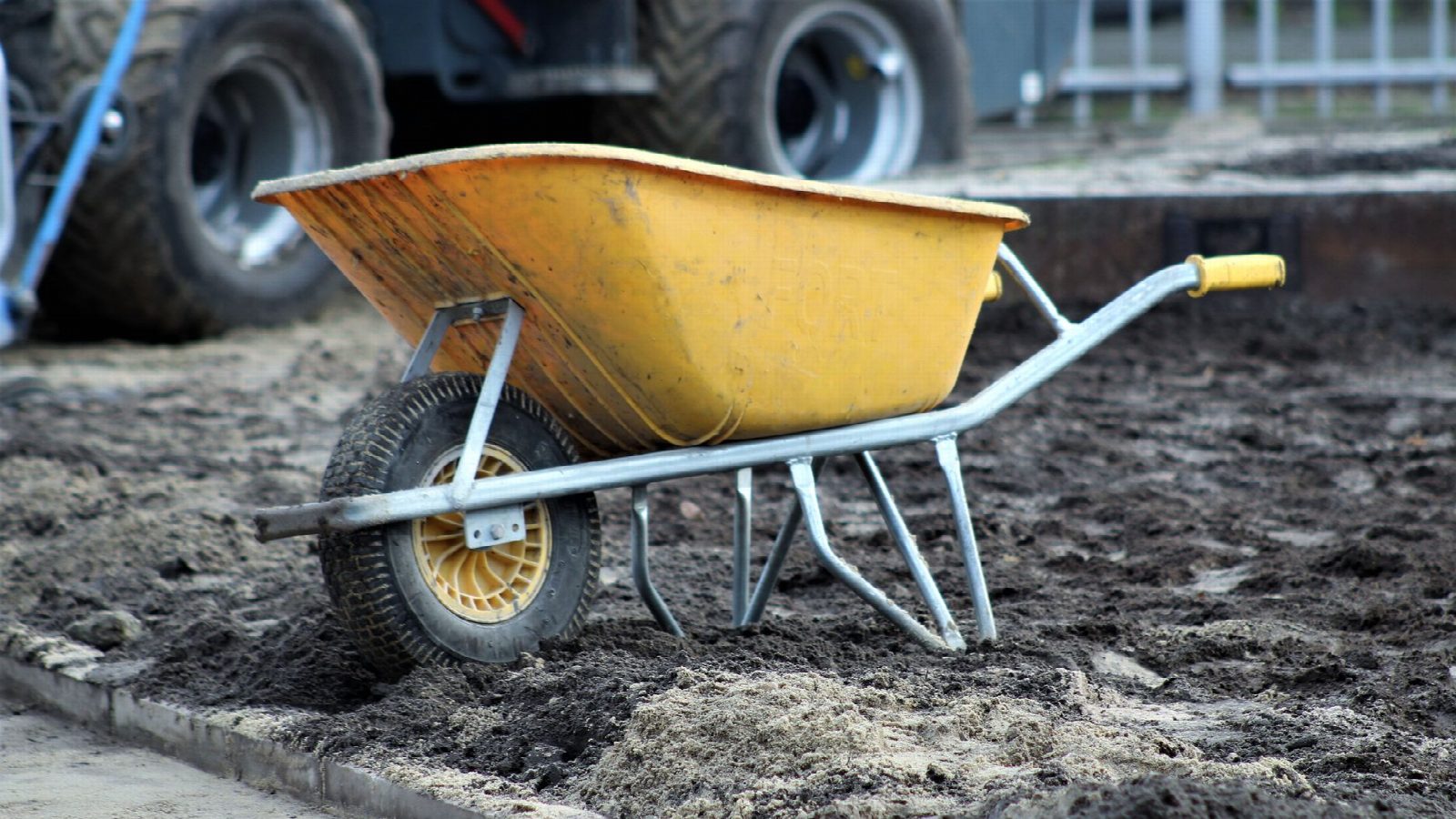
We're Hilton & Green Landscaping, a landscape gardening firm working in Norwich and the surrounding Norfolk villages, and a waterlogged lawn fix is one of the jobs we get asked about most after a wet spell. Puddles that sit for days, grass that squelches underfoot, moss creeping in at the edges — it's a common sight here, and it's nearly always a sign that water can't get down through the soil fast enough.
Why your lawn holds water
Rain has to go somewhere. On a healthy lawn it soaks through the grass, down past the roots and away into the subsoil. When that path is blocked, the water sits on top instead.
There are a handful of usual culprits:
- Compacted soil. Foot traffic, kids, dogs, a trampoline in the same spot all summer — the soil particles get squeezed together and there's no air space left for water to move through.
- Thatch build-up. A thick spongy layer of dead grass and roots sits between the green growth and the soil, holding water like a mat.
- Clay subsoil. Plenty of gardens round Norfolk sit on heavy ground. Clay drains slowly at the best of times and barely at all once it's saturated.
- Builder's rubble or topsoil skimped on. On newer estates we often find a thin skin of topsoil laid straight over compacted subsoil and brick ends.
- Levels running the wrong way. If the ground falls towards the house or towards a low corner, that's where the water collects.
Working out which of these you've got matters, because the fix is different for each one. Digging a small test hole and seeing how deep the decent soil goes tells you a lot in five minutes.
The waterlogged lawn fix, step by step
1. Leave it alone while it's wet
The worst thing you can do is walk on a saturated lawn or get a mower on it. Every footstep presses the soil tighter and makes next winter worse. Wait until the surface firms up before you start work.
2. Scarify to clear the thatch
If there's a spongy brown layer under the grass, raking or machine scarifying lifts it out. This on its own can make a noticeable difference to how fast rain disappears, and it gives moss far less to grow in.
3. Aerate the soil
Hollow-tine aeration pulls small plugs of soil out of the lawn and leaves open channels for water and air. It's the single most useful thing for a compacted lawn. Solid spiking helps a bit, but hollow tines actually remove material rather than just pushing it sideways.
4. Top dress with sand or a sandy loam
After aerating, brushing a free-draining top dressing into the holes keeps those channels open rather than letting them seal up again. Repeated over a couple of seasons, this gradually changes the top few inches of your soil for the better.
5. Overseed the bare patches
Waterlogging kills grass and lets moss and weeds in. Once drainage is sorted, fresh seed in spring or early autumn fills the gaps so the lawn thickens up and crowds the moss out.
When aeration isn't enough
Sometimes the problem is below the reach of a tine. If your garden sits in a dip, or there's a hardpan layer, or the water is genuinely coming off a neighbouring plot, surface treatment is only ever going to buy you a bit of time.
In those cases we'd look at:
- Land drains. Perforated pipe in a gravel-filled trench, laid to a fall, taking water to a soakaway or a suitable outfall.
- A soakaway. A deep pit filled with crates or clean stone that lets collected water seep away slowly.
- Re-grading. Reshaping the levels so water runs away from the house and off the worst areas.
- A pond or rain garden. If one corner is always wet, sometimes the sensible answer is to work with it rather than against it. Have a look at our garden ponds page if that appeals.
- Hard landscaping. Where a lawn genuinely won't thrive, a permeable patio or path can be a better use of the space.
Keeping it right afterwards
A lawn that's been fixed once will go backwards again if it's left to compact. Regular aeration, keeping the mowing height up a bit over winter, and clearing fallen leaves before they mat down all help. That's the sort of thing we handle on our garden maintenance visits — the small jobs at the right time of year that stop bigger problems forming.
If the turf is too far gone to save, lifting it and starting again with proper ground preparation underneath is often less work than it sounds. There's more about that on our lawns and turfing page.
Where we work
We cover Norwich and the surrounding area, including Wymondham, Long Stratton and Diss. You can see the full list on our areas we cover page.
If your lawn's underwater and you'd like someone to come and look at it, call Hilton & Green Landscaping on 07711916180 and we'll arrange a time to walk the garden with you.