
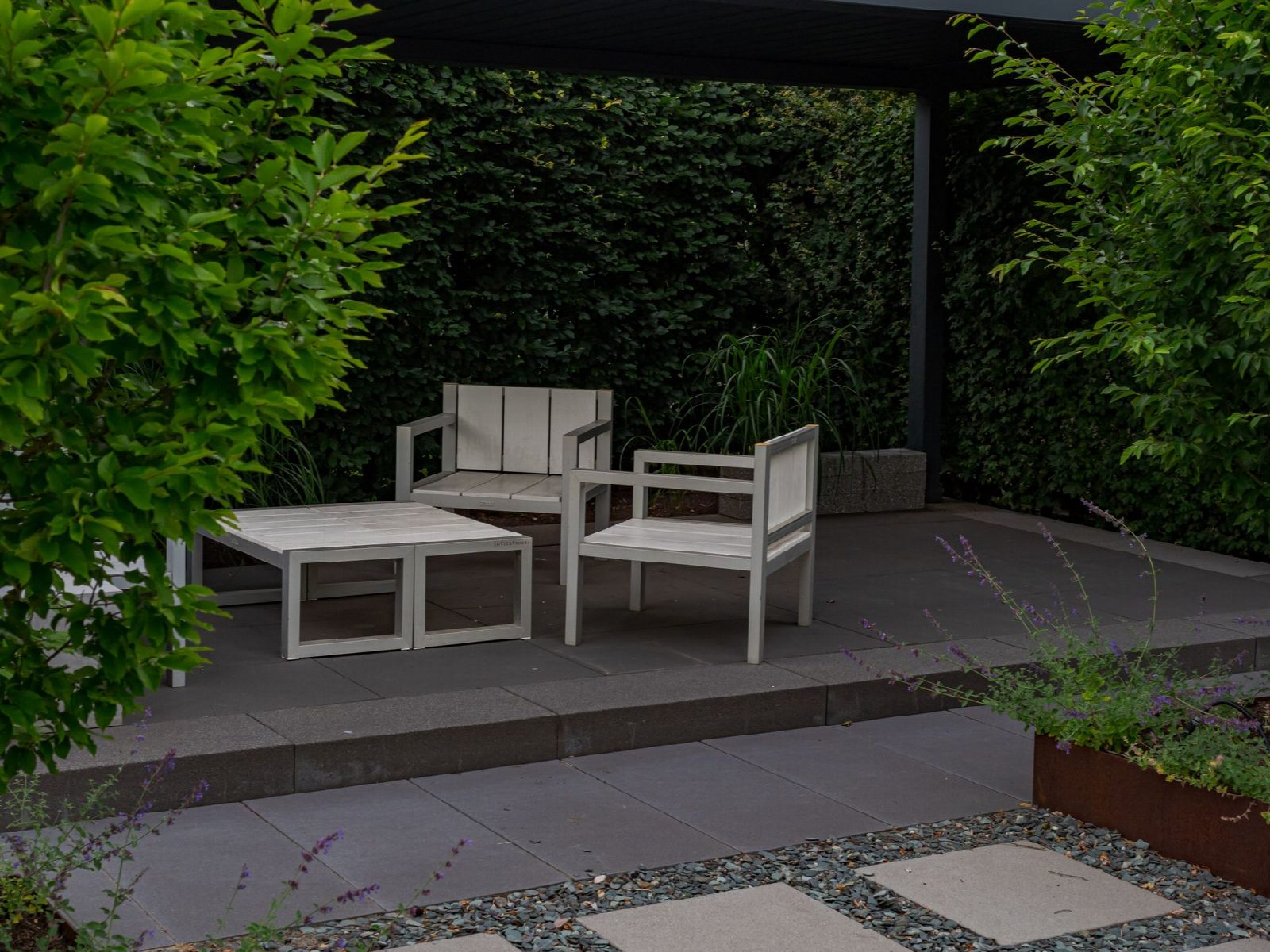
We're Hilton & Green Landscaping, and we build patios and do landscape gardening across Norwich and the surrounding villages. One of the first things people ask us is what a patio cost Norwich homeowners should expect, and the honest answer is that it depends on a handful of practical things. Below we've set out what actually moves the price up or down, so you can see where your money goes before you ask anyone for a figure.
What makes up a patio price
A patio quote is really four things added together: the groundwork, the materials, the labour and the bits around the edges. The groundwork is the part nobody sees once it's finished, and it's often the biggest chunk. Digging out, carting spoil away, laying and compacting a sub-base and getting the levels right takes time, and it's what stops a patio sinking or rocking a few winters later.
Materials are the part people usually think of first, because that's the bit you choose from a brochure. Labour sits alongside both, and it climbs with anything fiddly: cuts around a manhole, curved edges, steps, or tying a new patio into an existing path.
Size, but not in a straight line
A bigger patio costs more, but not neatly per square metre. A small patio still needs the same skip hire, the same tools on site and the same setting out time, so the cost per square metre on a tiny terrace is usually higher than on a large one. Going from 15 square metres to 25 doesn't add two thirds to the bill, because a lot of the setup is already paid for.
How the slab you pick changes the patio cost in Norwich
This is where the range is widest. Concrete paving is the cheapest route and it's improved a lot, with riven and smooth finishes that look fine once laid. Indian sandstone sits in the middle and is still the most common choice we lay. Porcelain is at the top end: the slabs themselves cost more, they need cutting with the right blade, and they're usually laid on a full mortar bed with a slurry primer on the back of every slab, which takes longer.
Slab size matters too. Large format slabs cover ground quickly, but they're heavy, often a two person lift, and less forgiving if the base isn't dead right. A mixed-size patio pack has more cuts and more setting out than a single size laid in rows.
Then there's the edging and the jointing. A brick or setts border, a step down to the lawn, or a low retaining wall all add materials and hours. Brush-in jointing compound costs more than sand and cement but goes in faster and holds up better on porcelain.
Access to the garden
Access is the hidden one. If we can get a barrow or a mini digger straight down the side of the house, the dig and the deliveries move quickly. If everything has to come through the house, or over a neighbour's drive, or down a narrow alley by hand, the same patio takes noticeably longer. Terraced houses in the city and anything with a tight side gate tend to sit at the higher end for this reason alone.
Waste follows the same rule. Clay subsoil is heavy and there's a lot of it coming out of a patio dig, and it all has to be moved somewhere. Where a skip can sit on a drive, that's simple. Where it needs a permit on the road, that's another cost.
Levels, drainage and what's already there
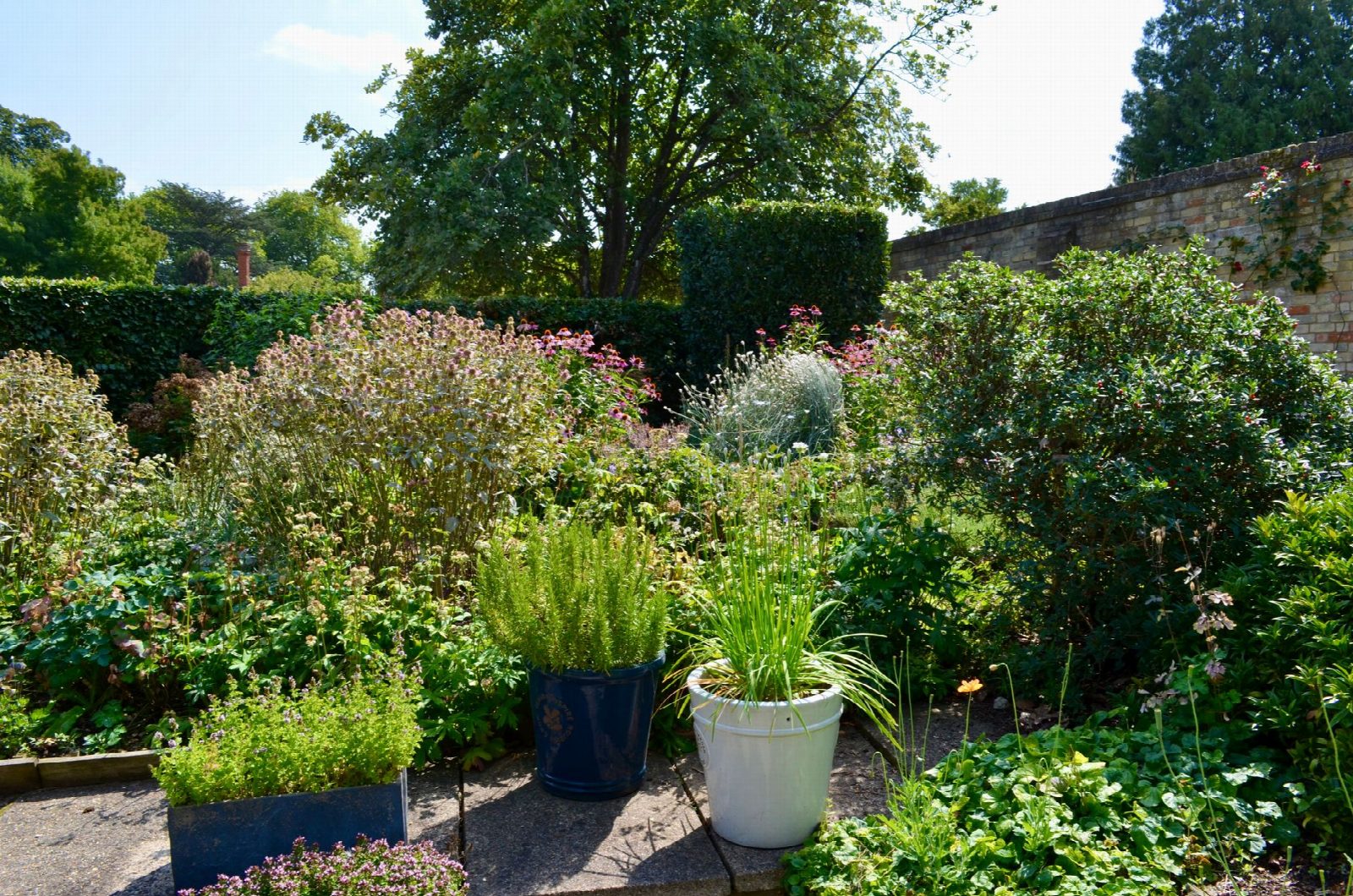
If your garden slopes, something has to give. You either step the patio, build a small retaining wall, or bring in and compact extra material to build levels up. All three add work. A flat garden that's already close to the right height is the cheapest starting point.
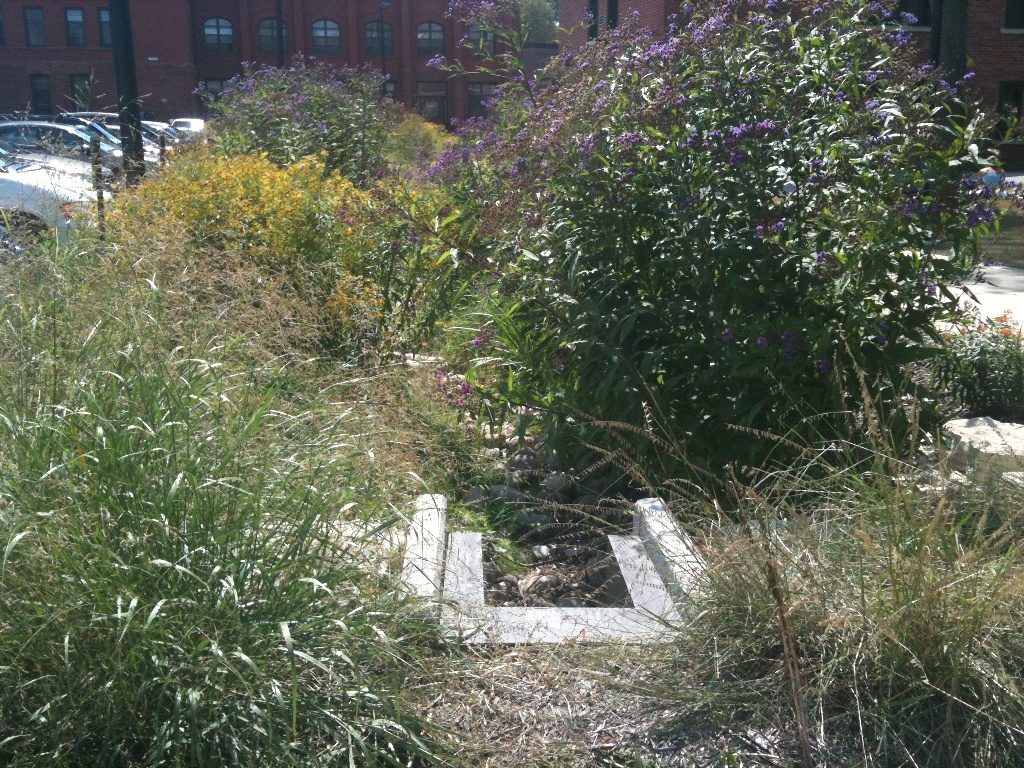
Falls and drainage matter as well. A patio needs a slight fall away from the house so water runs off, and that water has to go somewhere sensible rather than into a neighbour's garden or against a wall. Sometimes that means a linear channel drain along the house wall or a soakaway, and both are real costs worth knowing about up front.
What we're digging into counts too. Old concrete, a previous patio laid on a thick bed, tree roots or buried rubble all slow the dig down. We'd rather look at that in person than guess.
Time of year and how it fits with other work
Spring and early summer are busy, and that affects how far ahead you'll need to book rather than the price itself. If you're having other work done at the same time, there are often savings in sharing the dig, the skip and the deliveries. A patio and a new lawn together is a good example, and you can see what else we do on our patios page and across our services.
Getting a figure for your garden
The only way to put a real number on it is to come and look: measure up, check the access, see what's under the surface and talk through the slab you like. We cover Norwich and the wider area, and you can check where we work on our areas we cover page. There's also a gallery if you want to see the sort of finishes we're talking about.
If you'd like a patio priced properly for your garden, call Hilton & Green Landscaping on 07711916180 and we'll arrange a visit.