
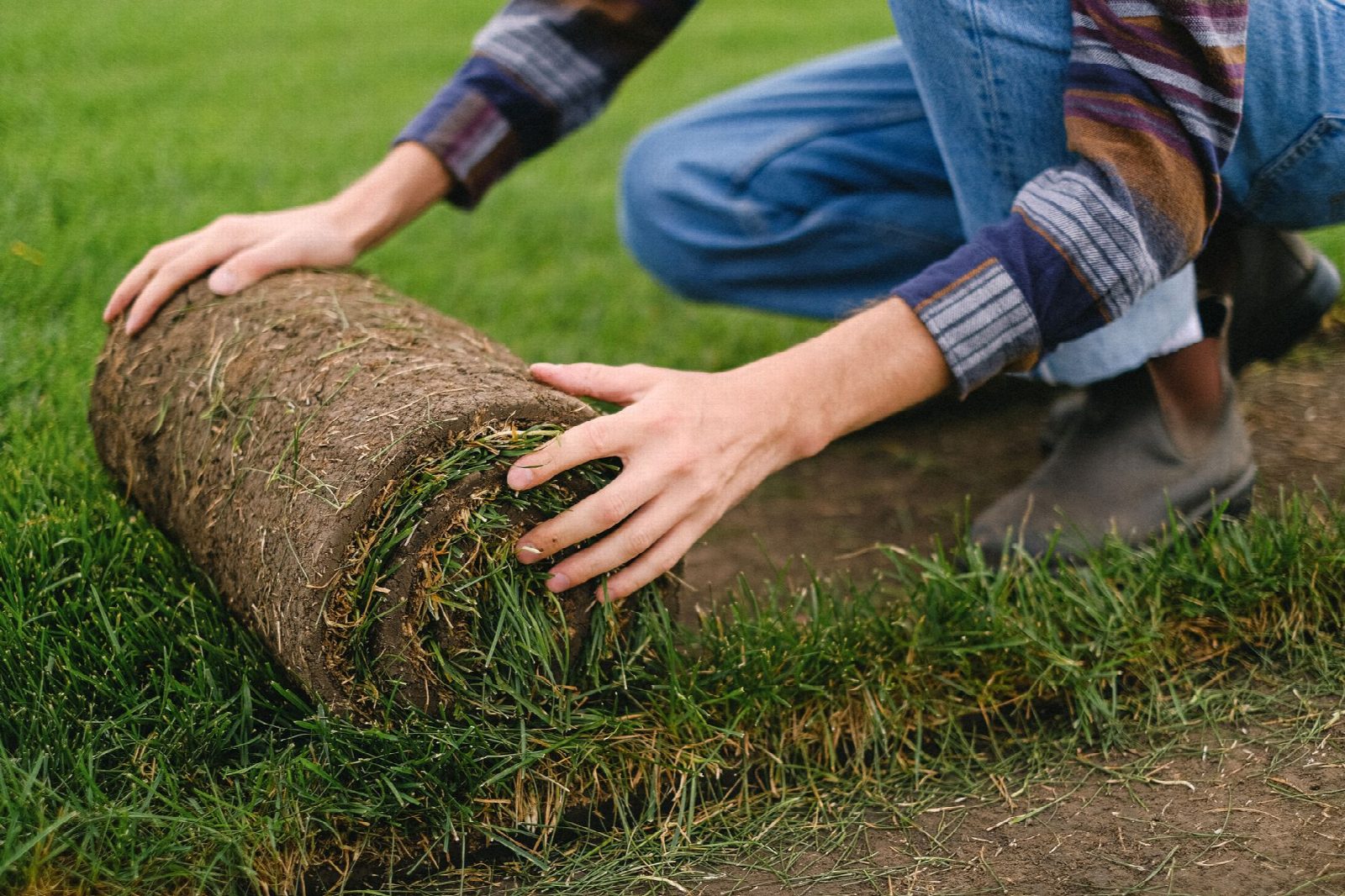
Hilton & Green Landscaping is a landscape gardening company in Norwich, and one of the questions we get asked most is turf vs grass seed: which is the better way to start a new lawn? Both work well in Norfolk gardens. The right choice usually comes down to how quickly you want a green lawn, how much you want to spend, and how much traffic the space gets.
The short answer
Turf gives you a finished lawn straight away and costs more. Grass seed costs less and gives you a lawn over a few months, with more looking after in the early weeks.
Everything else is detail. But the detail matters, because a lawn laid or sown badly will show it for years.
Turf vs grass seed: the main differences
Speed
Turf is instant. We prepare the ground, roll it out, and you have a green lawn the same day. You still need to keep off it while it roots, but visually the job is done.
Seed takes time. You will see the first shoots in one to three weeks depending on soil temperature, and the lawn will look patchy for a while before it thickens up. A seeded lawn usually needs a full growing season before it looks and behaves like a proper lawn.
Cost
Seed is the cheaper option by some margin. You are paying for a bag of seed and the ground preparation. With turf you pay for the turf itself, delivery and the labour of laying it, on top of the same ground preparation.
That said, the ground prep is the same work either way. If you cut corners there, neither option will thrive, so the saving on seed is smaller than people expect.
Time of year
Turf can be laid through most of the year as long as the ground is not frozen or waterlogged. Autumn and spring are ideal because the turf roots quickly and rain does some of the watering for you. Summer turfing is possible but you must be prepared to water heavily.
Seed is fussier. It needs warm soil and steady moisture, which in Norwich usually means April to early June, or September into early October. Sow outside those windows and you risk poor germination, or seedlings that dry out or get frosted.
Weeds
New turf arrives as a dense mat of grass, so weeds have less room to get in. A seeded lawn is bare soil for several weeks, and any weed seed already in that soil gets the same head start as the grass. We can reduce that with good preparation, but some hand weeding is normal in the first season.
Slopes and awkward ground
On a slope, seed washes downhill in heavy rain and you end up with bald patches at the top and thick clumps at the bottom. Turf holds in place from day one. For banks and sloping gardens we almost always recommend turf.
Wear and tear
If you have children, a dog, or a garden that gets used every day, turf gets you back to using the space far sooner. A seeded lawn needs to be left largely alone for the first couple of months, which is not always realistic.
What matters more than the choice itself
Ground preparation decides how good the lawn will be. That means clearing the old surface, removing roots and debris, breaking up compacted soil, levelling, and adding topsoil where the existing soil is thin or poor.
Much of Norfolk sits on light, sandy, free-draining soil. That is easy to work with but it dries out fast, so a new lawn here needs watering more than people assume. Other parts of the county are heavier and hold water, which brings the opposite problem: compaction and puddling. We look at what is actually under your garden before we recommend anything.
Drainage is worth sorting before the lawn goes down, not after. Laying beautiful turf over ground that sits wet all winter just gives you a wet lawn.
Watering is not optional
Whichever route you take, the first few weeks decide the outcome.
New turf needs a good soak daily in dry weather until it has rooted, which you can test by lifting a corner. If it resists, the roots have taken. Let it dry out and the edges shrink and gap, and those gaps never fully close on their own.
New seed needs the top layer of soil kept damp constantly. If it germinates and then dries out, the seedlings die and you have to start again.
Which do we usually recommend?
For most Norwich front gardens and family back gardens, we lean towards turf. It is quicker, more forgiving, better on slopes, and you get the use of your garden back sooner.
We suggest seed when the budget is the deciding factor, when the area is large and flat, when there is no rush, and when someone is around to water it properly. Seed also gives you more choice over grass mixes, which is useful for shaded areas or hard-wearing family lawns.
Sometimes we do both: turf the main lawn where it is seen and used, and seed a further area at the back.
You can see more about how we handle new lawns on our lawns and turfing page, and if a new lawn is part of a bigger change to the garden, our garden design service covers the whole layout. Once the lawn is established, garden maintenance keeps it in shape through the seasons. To check we work in your part of Norfolk, see areas we cover.
If you would like an honest opinion on whether turf or seed suits your garden, call Hilton & Green Landscaping on 07711916180 and we will come and take a look.