
We're Hilton & Green Landscaping, a landscape gardening firm working in Norwich and the villages around it, and a good part of what we do is planting borders Norwich gardens can actually keep up with. A border is the part of a garden people look at most, and it's also the part that goes wrong first if the plants were never right for the spot.
What makes a Norwich border different
Soil varies a lot across the city and the surrounding parishes. In plenty of Norwich gardens you'll find free-draining sandy or gravelly ground that dries out fast in summer, and in others you'll hit heavier clay that stays wet through winter and bakes hard in July. Dig a hole before you buy anything. If the sides stay crumbly and loose, you've got light soil. If it smears and shines when you rub it, there's clay in there.
The other thing to factor in is the wind. Norfolk gardens often sit fairly open, and an easterly can batter tall, soft-stemmed plants that would be fine in a sheltered town garden further inland. Delphiniums and the taller heleniums will need staking or a hedge behind them. Lower, tougher planting copes better if your garden has nothing between it and the fields.
Reading the light
Before we plant anything, we work out how long each stretch of the bed gets direct sun. A border along a south-facing fence is a completely different proposition to one under a mature tree on the north side of a house. Most plant failures we get called out to look at come down to a sun-lover sitting in shade, or a shade plant frying against a hot wall.
It's worth watching your own garden for a few days before you commit. Morning sun and afternoon sun behave differently, and a spot that's bright in April can be in full shade by June once the trees leaf up.
How we plan and plant borders
We start by setting the shape and depth. A border that's too narrow is the most common problem we see. Anything under about 600mm deep only really holds one row of plants, so it never looks full and it dries out quickly. Where there's room, we'd rather give a bed a metre or more and curve the front edge so it reads as deliberate rather than squeezed in.
Then we deal with the soil itself. On sandy ground we dig in plenty of organic matter to help it hold moisture and feed. On clay we're doing the same thing for the opposite reason, to open it up and let water move through. Either way, that work happens before a single plant goes in, because you can't do it properly afterwards.
Structure first, then the colour
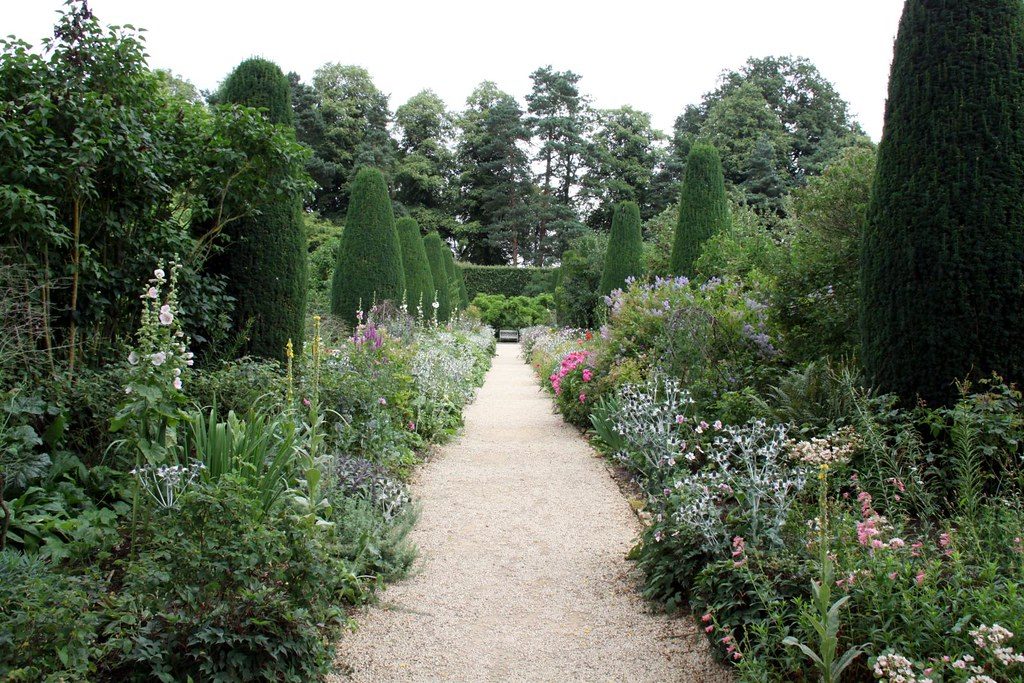
We set out the backbone of a border first: the shrubs and evergreens that hold the shape through winter. Things like box, hebe, viburnum or a shaped yew give you something to look at in February when the perennials are just bare stems. Once that skeleton is in, the herbaceous planting fills the gaps between.
We plant perennials in groups of three or five rather than dotting single plants about. Odd numbers in drifts read as one block of colour from a distance, which is how you'll actually see the border from the kitchen window. Single plants scattered along a bed just look spotty.
Spacing and the waiting game
New borders look sparse, and there's no getting round it. We space plants for the size they'll reach in two or three years, not the size they are in the pot. It's tempting to cram them in, but then you're lifting and dividing within a couple of seasons and the stronger plants smother the rest. Annual bedding or bulbs in the gaps will cover the bare soil for the first year or two while everything establishes.
Plants that generally do well round here
On the drier, sandier gardens we tend towards plants that don't mind it: lavender, nepeta, salvia, sedum, verbena bonariensis, ornamental grasses like stipa and calamagrostis. These cope with a dry spell without constant watering, which matters in a hot Norfolk summer.
On heavier, damper ground, geranium, astrantia, persicaria, hardy fuchsia and hellebores all settle in well. For shade under trees, ferns, epimedium, hostas and pulmonaria give you foliage interest where flowers struggle.
We'll always talk through what you want from the bed as well. A border meant to be low effort is planted differently to one where you enjoy deadheading on a Sunday morning. If you want something designed across the whole garden rather than one bed, that's covered under our garden design work.
Mulching and keeping it going
Every border we plant gets mulched. A layer of bark or composted material around 50 to 75mm deep holds moisture in, keeps weed seeds from germinating at the surface, and slowly feeds the soil as it breaks down. Keep it clear of plant stems so you're not trapping damp against them.
After that, a border needs cutting back at the right point in the year, dividing every few years, and topping up with mulch each spring. We can handle that as part of garden maintenance, or leave it with you if you'd rather do it yourself.
If you've got a tired bed in Norwich that's gone to grass and ground elder, or a bare stretch you've never known what to do with, give Hilton & Green Landscaping a ring on 07711916180 and we'll come and have a look at it with you.