
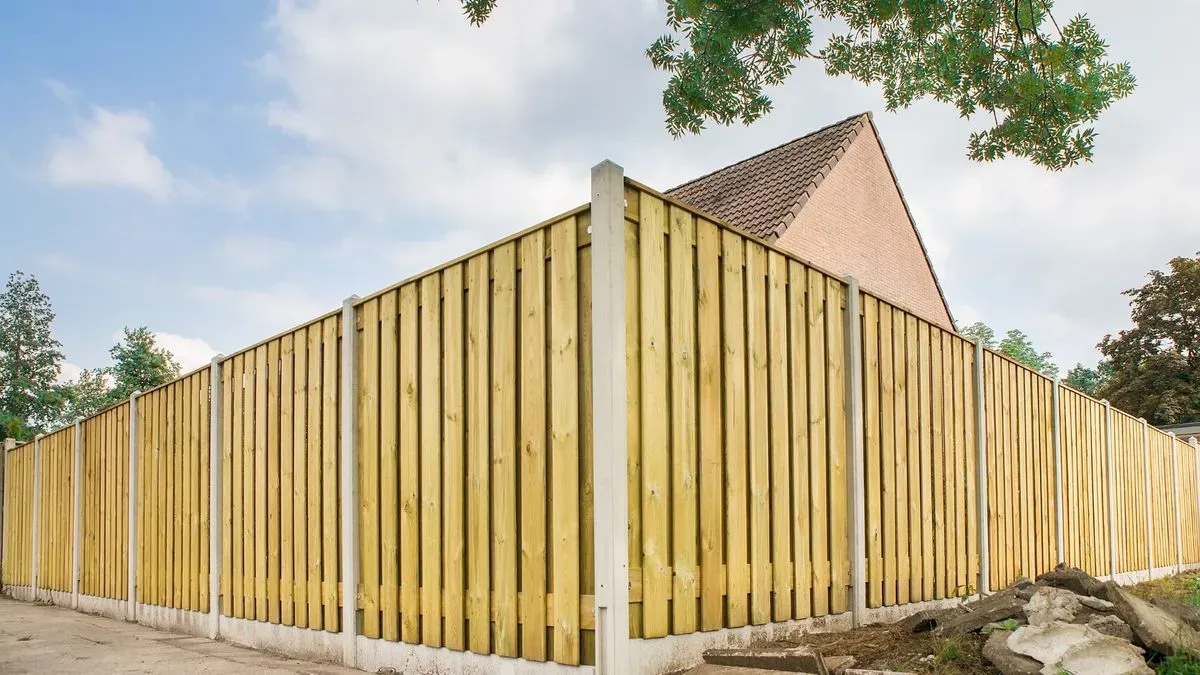
Hilton & Green Landscaping is a landscape gardening company in Norwich, and one of the jobs we get called out for most after a windy night is loose fence panel repair. A panel that lifts, rattles or lands flat on the lawn every time the weather turns is telling you something. Usually it isn't the panel's fault at all.
Why the same panel keeps blowing out
If one panel goes and the rest stay put, there's a reason. Wind doesn't pick favourites. Here are the causes we find most often.
The posts have gone
This is the big one. Timber posts rot at ground level, where wet soil meets air. The top of the post can look fine while the bit under the surface has turned soft. Give the post a firm push. If it rocks, or if you can push a screwdriver into the timber near the ground, the post is done. No amount of screwing the panel back in will hold, because the thing you're screwing into has nothing left.
Concrete posts can fail too, usually where the slot has chipped or the post has cracked and started to lean.
The panel is only sitting in the slot
With concrete posts and gravel boards, panels drop into a slot and sit there under their own weight. Nothing holds them down. A strong gust gets under the bottom edge, the panel lifts, and out it comes. It's a common design and it works fine until you get a proper blow.
The fixings have pulled through
On timber posts, panels are usually held with nails or brackets. Nails work loose over years of movement. Brackets rust through. Screws pull out of soft, wet frame timber. You'll often see the panel is still hanging on at one corner by a single fixing.
The panel itself is failing
Overlap panels have thin frames. If the frame has split or the corner joints have opened up, fixings won't hold in it. Once the frame goes, the panel flexes in the wind and works itself free.
Wind is funnelling through the garden
Gaps between buildings act like a wind tunnel. A solid, close-board fence at the end of a narrow side passage takes a lot of pressure. In an exposed spot, a slatted or hit-and-miss panel lets air through and takes far less load.
How we approach a loose fence panel repair
We start with the posts, not the panel. There's no point refitting a panel to a post that's about to snap. We check each post either side of the problem panel, look at the base, and check whether the concrete around it has cracked or lifted.
If the posts are sound, the fix is straightforward. We refit the panel with proper fixings into solid timber, add panel clips or fence brackets rather than relying on nails, and where panels sit in concrete slots we can add retaining clips or a fixing through the frame so the panel can't lift out.
If a post has rotted, it needs replacing. That means digging out the old post and its concrete, setting a new one at the right depth and getting it plumb and in line with the run. We can put in a concrete spur alongside a rotten timber post as a cheaper option in some cases, though a full post replacement lasts longer.
Where the panel itself has broken up, we'll say so. Screwing a split frame back together buys you one season at most.
Small repairs that make a real difference
A few things stop the same problem coming back:
- Gravel boards. These keep the bottom of the panel out of the wet soil, which is where rot starts. They're cheap to replace when they go, unlike a panel.
- Post caps. Water sitting on an open post end soaks straight down into the grain.
- Clearing the base. Soil, bark chip and border planting piled against posts and panels holds moisture. Pulling it back a few inches helps a lot.
- Cutting back growth. Ivy and heavy climbers add weight and catch wind like a sail. Our garden maintenance work often includes taking growth off a fence line before it does damage.
When repair stops making sense
If you're fixing a different panel every few months, you're spending money on a fence that's at the end of its life. Once several posts are soft and the panels have grey, flaking timber with open joints, replacing the run is usually better value than repeated call-outs.
We'll give you a straight answer either way. Sometimes it's two posts and a morning's work. Sometimes it's a new fence. We'd rather tell you which it is before you spend anything.
You can see more about what we do on our fencing page, and there are photos of finished work in our gallery. If you're not sure whether we come out to your village, have a look at areas we cover.
Get it looked at
A loose panel is annoying. A panel that flies into a car or a greenhouse is expensive. If yours keeps coming out, call Hilton & Green Landscaping on 07711916180 or drop us a message through our contact page and we'll come and have a look.